Panch Pokhari Trek: A Visual Journey and Photography Guide to Nepal’s Hidden Glacial Lakes
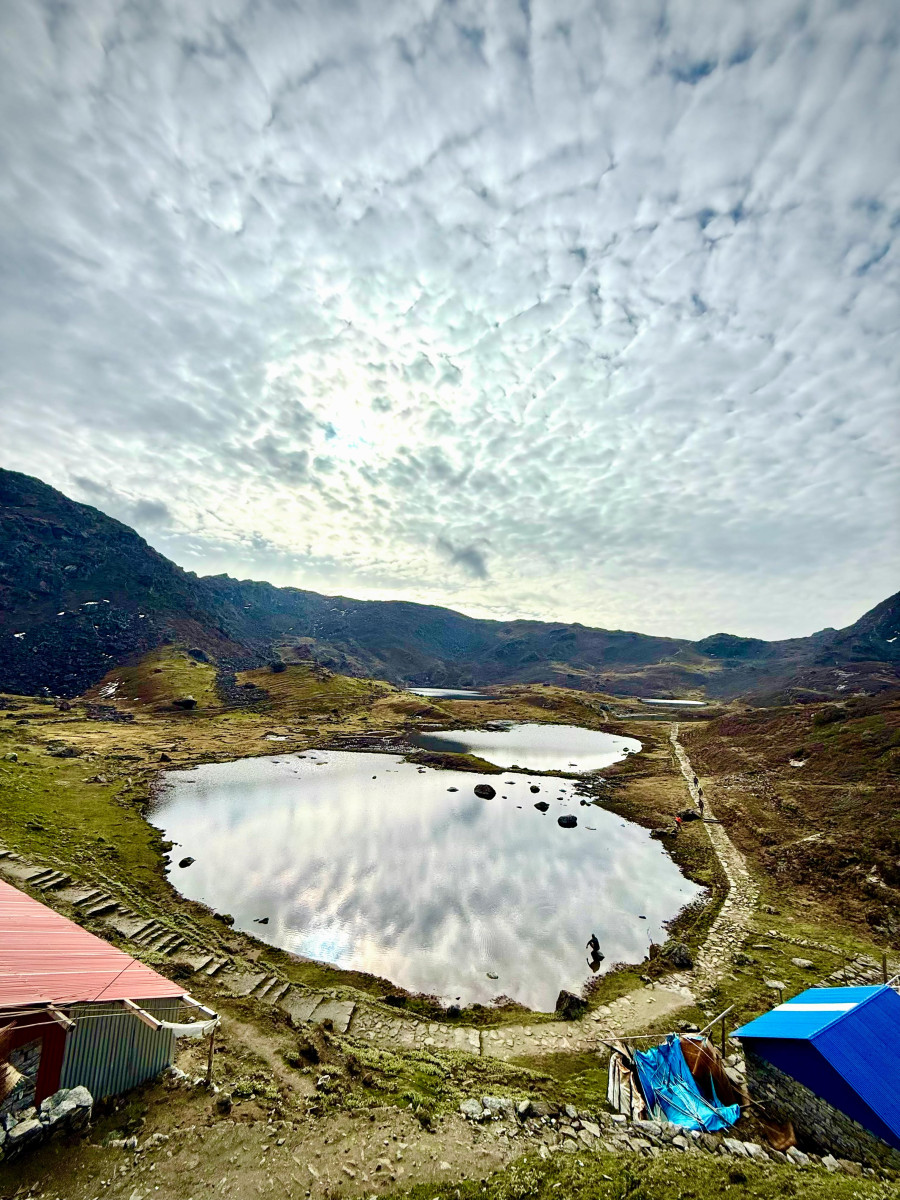
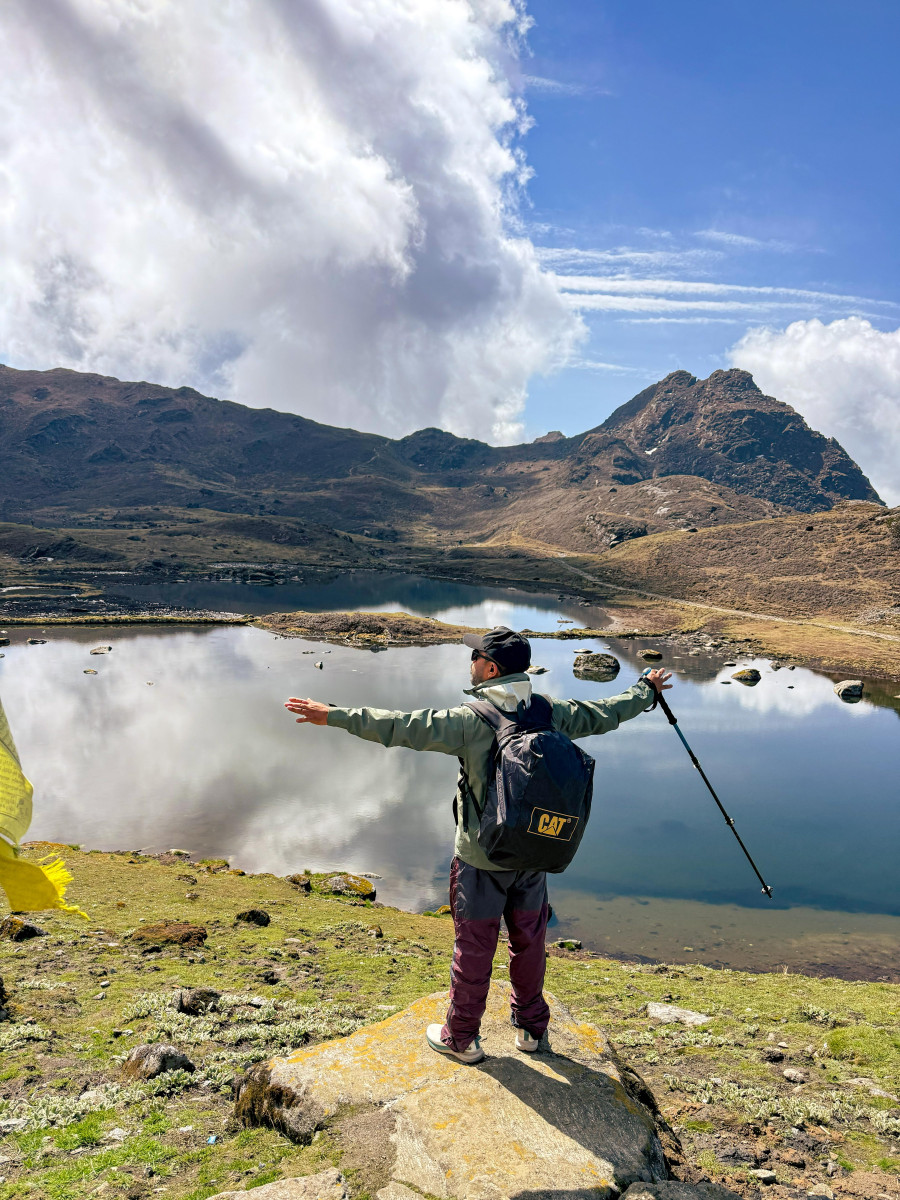
Hidden deep within the rugged embrace of the Sindhupalchok district lies a destination where clouds float beneath your feet and five pristine, turquoise glacial lakes mirror the endless sky. This is Panch Pokhari (literally meaning “Five Lakes”).
Sitting at an altitude of 4,100 meters, Panch Pokhari is a paradise for travel photographers, landscape videographers, and adventure enthusiasts seeking an off-the-beaten-path trekking experience in Nepal.
In this comprehensive travel guide by Photo Choice Nepal, we bring you an immersive 4-day travelogue, dynamic itinerary data, and expert photography tips to help you capture this sacred Himalayan jewel.
Panch Pokhari Trek Overview
-
Altitude: 4,100 meters (13,451 feet)
-
Trek Difficulty: Moderate to Strenuous
-
Best Time for Photography: Autumn (October–November) for crisp clear skies, and Late Spring (May–June) for dramatic weather patterns and blooming alpine flora.
-
Key Attractions: Langtang National Park, five sacred alpine lakes, panoramic Himalayan sunrise, and indigenous Hyolmo culture.
The 4-Day Panch Pokhari Travelogue: A Tale of Resilience
Day 1: Kathmandu to Deurali (The Grit of the Off-Road Journey)
Our journey commenced from Jadibuti and Chabahil in Kathmandu. After assembling our team of riders, we set off toward Sankhu on our motorcycles. The asphalt quickly gave way to a punishing dirt track as we trailed along the banks of the roaring Indravati River past Melamchi Bazaar.
The Rider’s Dilemma: As twilight dissolved into a thick, misty dusk, one of our motorcycles broke down in the middle of a dense, isolated forest. Battling a steady drizzle, we managed to trace an off-grid workshop miles away. By the time our mechanical issues were resolved, it was 9:30 PM before we finally collapsed into our beds at our first overnight destination, Deurali.
Day 2: Deurali to Tupi Danda & The High-Altitude Storm
Leaving our motorcycles safely parked at Deurali, we strapped on our backpacks to begin the foot trek. We officially entered Langtang National Park after a routine security checkpoint at the army barracks and headed up a punishing, near-vertical forest incline toward Tupi Danda. A quick break for hot tea and flatbreads here revitalized our spirits.
As we climbed higher through the dense canopy, we crossed paths with a fast-moving army patrol unit on regular mountain security duty. Soon after, the capricious mountain weather turned hostile. Dark clouds gathered instantly, unleashing a torrential downpour of heavy rain and hail.
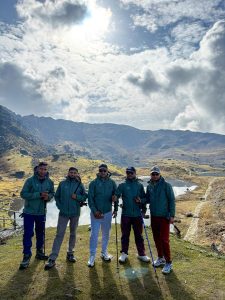
The abrupt drop in temperature left us shivering, our hands freezing tightly around our trekking poles. Just as exhaustion was reaching its breaking point, a solitary mountain teahouse emerged through the mist. Clustering around a traditional iron stove (Bukhari), we dried our gear, shared a hot meal, and decided to call it a night to preserve our team’s safety.
Day 3: Reaching the Heavenly Sanctum of Panch Pokhari
We woke up at 2:00 AM to freezing alpine winds. By 3:45 AM, guided only by the piercing beams of our headlamps, we tackled the final, steep ridge.
As the first light of dawn fractured the horizon, painting the Himalayan peaks in brilliant hues of gold and amber, all memories of the previous day’s physical toll dissolved. We had arrived.
📷 Photography Tip: High altitude drains camera batteries rapidly. Keep your spare batteries wrapped in a warm sock inside your inner jacket pockets close to your body heat until the exact moment you need them.
Summit Timeline & Activity Log
| Time | Milestone / Activity |
| 03:45 AM | Departed the teahouse for the final ascent |
| 07:00 AM | Arrived at the sacred Panch Pokhari basin (4,100m) |
| 08:30 AM | Ritual bathing, temple darshan, and circumnavigating the lakes |
| 09:30 AM | Connected via solar-powered Wi-Fi to update family; began descent |
Standing at 4,100 meters, the landscape was ethereal. A blanket of rolling white clouds stretched out completely below us, while the five pristine lakes sat silently like mirrors catching the early morning light. After capturing our landscape frames and receiving blessings at the local shrine, we began the steep descent back down the mountain.
Day 4: Return to the Capital
We reached our bike parking spot at Deurali by 9:00 AM, packed our gear, and began the long ride back. After a heavy lunch at Melamchi, our team safely rode back into Kathmandu by 3:00 PM, concluding an unforgettable chapter of mountain exploration.
Masterclass: Panch Pokhari Landscape Photography Tips
To walk away with publication-grade frames from this specific trek, integrate these professional habits into your workflow:
-
Master the Reflection during Golden Hour: The absolute best window for photography is between 6:00 AM and 7:30 AM. This is when the wind is dead calm, allowing the surface of the lakes to act as a flawless mirror reflecting the surrounding peaks.
-
Pack an Ultra-Wide Angle Lens: To capture the immense spatial scale of all five lakes within a single frame, you will require a focal length between $16\text{mm}$ and $24\text{mm}$ on a full-frame sensor.
-
Incorporate the “Human Element”: Pure landscapes can sometimes lack scale. Placing a fellow trekker wearing contrasting, vibrant colors (like red or yellow) into the lower third of your frame adds depth, perspective, and tells a compelling story of human scale vs. nature.
-
Mind the National Park Rules: Because this trail cuts straight through Langtang National Park, operating commercial drones requires strict prior permits from the Department of National Parks and Wildlife Conservation.
🎒 The Ultimate Panch Pokhari Trekking Checklist
The unpredictable mountain weather and sharp ridge climbs of Panch Pokhari demand smart packing. If you are preparing for this expedition, use this checklist to ensure you don’t leave anything essential behind.
📷 Photography & Electronics (Photo Choice Nepal Special)
-
Camera Body & Lenses:
-
Wide-angle lens (16mm – 24mm): Great for capturing expansive landscapes and fitting all five lakes into a single frame.
-
Prime lens (35mm or 50mm): Perfect for taking natural portraits of fellow trekkers and telling local stories.
-
-
Batteries: At least 2–3 spare batteries (remember to keep them warm inside your jacket near your body heat).
-
Power Bank: A heavy-duty 20,000 mAh power bank (electricity for charging is scarce and often expensive at high camps).
-
Memory Cards: High-capacity, weather-sealed SD cards.
-
Protection: Microfiber cleaning cloth and a reliable waterproof rain sleeve for your camera bag.
🧥 Clothing & Weather Layers
-
Base Layer: Moisture-wicking thermal tops and bottoms (avoids sweat buildup during steep climbs).
-
Insulation Layer: A lightweight fleece jacket or down jacket for the freezing mornings at 4,100 meters.
-
Outer Layer: A high-quality waterproof and windproof jacket (essential for the sudden hail and rain storms like the one we faced!).
-
Trekking Pants: 2 pairs of breathable, quick-dry trekking pants.
-
Footwear: Sturdy, broken-in trekking boots with good ankle support, plus 3 pairs of thick woolen socks.
-
Head & Hands: A warm beanie, a sun-protection cap, and lightweight waterproof gloves.
🗺️ Trekking Gear & Essentials
-
Backpack: A comfortable 40L- 50L backpack with a built-in waterproof rain cover.
-
Trekking Poles: Highly recommended to save your knees during the near-vertical forest inclines and steep descents.
-
Illumination: A reliable headlamp with extra batteries (absolutely mandatory for the 3:45 AM alpine summit push).
-
Hydration: A reusable 1-liter water bottle and water purification tablets or a filter.
🩹 Medical Kit & Personal Hygiene
-
First Aid: Band-aids, blister tapes, pain relievers, and antiseptic cream.
-
Altitude Safety: Acetazolamide (Diamox) for Acute Mountain Sickness (AMS), after consulting your physician.
-
Skin Protection: High SPF sunscreen and lip balm to protect against intense high-altitude UV rays.
-
Hygiene: Biodegradable wet wipes, hand sanitizer, and a quick-dry travel towel.
💳 Documents & Currency
-
Permits/IDs: Government-issued ID card or Passport (required for the Langtang National Park security checkpoint).
-
Cash: Ample local currency (NPR). Note: There are no ATMs on this route, and teahouses do not accept digital wallets or cards.
Frequently Asked Questions (FAQ)
How many days does the Panch Pokhari trek take from Kathmandu?
The entire trek can be comfortably completed in 3 to 4 days using a hybrid itinerary of off-road riding/driving on Day 1, ascending to the high camps on Day 2, summiting and descending on Day 3, and returning to Kathmandu on Day 4.
What is the exact altitude of Panch Pokhari, and is there a risk of AMS?
Panch Pokhari is situated at an elevation of 4,100 meters (13,451 feet). Because you cross the critical 3,000-meter threshold quickly on this route, it is vital to maintain steady hydration, climb slowly, and watch for early signs of Acute Mountain Sickness (AMS).
What is the absolute best month to visit for photography?
October and November offer the most stable atmospheric conditions with maximum visibility for mountain photography. However, if you want to capture dramatic clouds juxtaposed against blooming wildflowers, late Spring (May) is highly rewarding.
Conclusion: Capture the Untamed Wilds
Panch Pokhari isn’t just another trekking trail; it is a raw, shifting canvas designed for landscape storytellers. The challenges—the brutal off-road terrain, freezing hailstorms, and sheer vertical climbs—are simply the price of admission to one of the most visually spectacular hidden basins in the Himalayas.
Planning your next photography expedition in Nepal? Whether you are looking for field gear reviews, professional camera tips, or raw travel inspiration, let Photo Choice Nepal be your guide. Visit our official platform at Photo Choice Nepal to explore our complete archive of visual travel blogs and gallery prints.